Click here for the readings of the XXIV Sunday in Ordinary Time (Year C):
"Who among you if he has a hundred sheep and loses one, does not leave the ninety and nine in the wilderness and goes in search of the lost one until you find it? When he found it full of joy, whether on his shoulders, goes home, calls the friends and neighbors and says to them: "Rejoice with me because I have found my sheep that was lost." (Lk 15.4-6)
But before stepping on the Gospel, let's look at the first reading, in which we witness the dialogue between God and Moses on Mount Sinai, shortly after the exodus from 'Egypt. God is angry with his people who "pervert" and began to worship a golden calf. He threatens to erase and re-start your plan, completely from scratch, but this time with Moses . Moses tuttavia, apre rapidamente una breccia con Dio e Lo supplica, in nome del popolo d'Israele. Dio ascolta la sua supplica, abbandonando la propria ira e decidendo di non dar seguito alla punizione che aveva minacciato.
In questa lettura si parla del peccato degli Israeliti e delle minacce di Dio di ripudiarli e di punirli. In effetti, anche noi, quando pecchiamo, non meriteremmo altro che la punizione e l'isolamento o, meglio ancora, la nostra punizione è il nostro isolamento da Dio, come la nostra separazione da Dio significa essere separati dalla fonte dell'amore e di tutta la vita. In tutta la Scrittura vediamo questo ciclo ripetersi: Dio stabilisce un legame (l'alleanza) con il Suo popolo, l'uomo rompe quel legame e Dio deve mettere a punto un nuovo piano per ripristinare la comunione. Ma a differenza dei legami umani di amicizia che possono essere guariti dai nostri sforzi, i legami che una volta ci univano con Dio non possono essere curati se non è Dio ad intervenire. Per fare un esempio che mi viene in mente in questo momento: se tu e un tuo amico legate le mani con una corda e poi tagliate la corda, in qualche modo sarà sempre possibile riallacciare la corda. Se, invece, si è sospesi a 3.000 piedi di quota, legati a una corda che pende da una mongolfiera e si decide di tagliare la corda, non c'è speranza: quel legame è spezzato. Quando giriamo le spalle a Dio, abbiamo spezzato il filo della nostra vita, ci tuffiamo sempre più lontano da Dio verso death.
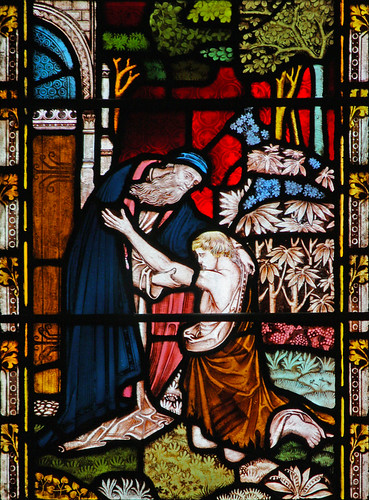
Thus, the parables of the Gospel of today give a striking example of isolation and pain that the man feels when distance or separates from God that we see in the stray sheep that wanders away from his pastor and son leaves his father. But on the other hand, just as Moses threw into the breach, in the first reading, to intercede for the people of Israel and to save him, so Jesus Christ is launched (Wisdom from 18.14 to 15) into the abyss caused by the our sin, to bring us back to God We have here a clash between sin, isolation and death on one side and the dramatic and powerful action of God to bring us home where we belong. In this
way, through the use of the parables of the "lost sheep" of the "lost coin" and "Prodigal Son", Jesus reveals that God is not a severe judge who expects to be able to punish our error, or he simply for dispensing mercy, looking down with haughty eyes and with great reluctance. On the contrary, these parables show us that in the person of Jesus Christ, God has broken into our world to actively seek and that He is pleased when he can lift us from our miseries. God is our Father who wishes to with patience, but at the same time earnestly, we returned home and rushed to hug when we see "the horizon". God is infinitely interested in us! We are your legacy and your baby - and this is something that we should think! In all three parables Jesus speaks of joy and celebration - expressions that faithfully reveal the innermost part of God's heart that longs to be with those he loves.
In conclusion I would say two things. First of all, the parables in the Gospel of today should make us reflect on our concept of God - what is our vision of Him, they have the power to purify the way we see God, ourselves and others as long as there take time to meditate. Secondly, S. Paul (in the second reading) is a shining example of a man who lives on the border between the pains of this life and the joy of heaven. He magnificently embodies the parables of the "lost sheep" and "Prodigal Son". The sorrow for sins committed not cast him into despair, but, indeed, have become the context in which Jesus revealed the depth of His merciful love. S. Paul can then openly admit his sins - no need to pretend that he had never committed, or to attribute responsibility to others, and at the same time, he may rejoice in the mercy of God, the merciful love that has transformed ' St. Paul's entire life and that leads him to exclaim: "to the King eternal, immortal, invisible, the only God, be honor and glory for ever and ever. Amen. " (1 Tm 1,17) Vi auguro una bellissima Domenica!
(Foto "Ritorno del figliol prodigo", per gentile concessione di fr. Lawrence Lew, OP )


0 comments:
Post a Comment