Sunday, September 26, 2010

Dune Buggy Blueprints Free

XXVI Sunday in Ordinary Time - The choice is yours

Click here for the readings of the Mass for the Twenty-sixth Sunday in Ordinary Time (Year C):

"There was a rich man, who wore clothes of purple and fine linen, and every day he gave lavish banquets. A poor man named Lazarus, was at its door, covered with sores, who longed to eat what fell from the rich man's table. " (Luke 16.19-21)

In 1991 a group hip-hop, called "Black Sheep (Black Sheep) has composed a song entitled" The choice is yours, "became popular and broadcast repeatedly on radio stations in Seattle, where I grew up. I can not say why but it was the chorus of this song which kicks alla mia memoria mentre scorrevo il testo delle letture di questa Domenica. Il ritornello (che ripete a più riprese, "ora, puoi seguire questo o puoi seguire quello" ) è, in realtà, in sintonia con il messaggio che Gesù vuole portare alla nostra attenzione con le letture di oggi. Si armonizza bene anche con la morale della parabola del Vangelo di Domenica scorsa: "nessun uomo può servire due padroni .... non si può servire Dio e mammona."   Pertanto "puoi seguire questo" , cioè servire Dio e gli altri, o "puoi seguire quello" e vivere una vita di egoismo e non tener conto né di Dio né degli altri. La sola cosa che non si può done at the same time: to serve both money and God's choice is ours - that Jesus clearly stated in the Gospel last week, but, as shown by the readings for this Sunday, each of these choices has consequences.

In today's first reading the Lord reprimanded severely by the prophet Amos, the "carefree of Zion!" . The words of the prophet Amos were directed against those who lived in the unbridled luxury and extravagance, being completely indifferent to the suffering and poverty of their neighbors. The parable we hear today in the Gospel, likewise, presents the story of a rich man who enjoys a life of extreme luxury and does nothing to alleviate the sufferings of the poor Lazarus, a man who finds himself outside the door of the rich, in a state of extreme suffering.

In the parable we are presented with even the death of Lazarus and the rich. They end up in two completely different places, Lazarus is at peace, while the rich man is in a state of eternal torment and inconsolable. Note that the rich did not kill anyone, did not steal anything, it was not adulterous or libidinous, or appears to have never broken any of the commandments, as they are posted. But the real sin of the rich man is in his heart cold, his indifference and inaction in his , in refusing to relieve the suffering of Lazarus lying at his door when he was much more than just the means to do something to help him. "The rich man" is the antithesis of the "Good Samaritan". This is what, classically, is meant by the sin of "omission". In the case of the rich man that sin was worse:

(1) the proximity of Lazarus;

(2) the overabundance of resources available to the rich man.

With this parable Jesus shows that it is impossible to love God and at the same time, hate our brothers (cf. 1 Jn 4 , 20-21 ) - "hate" here is expressed as "indifference", in where the heart is closed to others. It 's inevitable that when you choose "Mammon rather than God and others things in our lives in them, come to this state. Taking into account the power of seduction of material wealth and property, if you do not consciously prefer God to "mammon" (whatever form it may take) there is a danger that God and others will slip away from their rightful place. The parable of good points today as very often the "hardness of heart" expresses what is happening outside in the deep: "If they hear not Moses and the Prophets, they will not be persuaded even if one rise again from the dead." When the heart is hard, it's amazing how many excuses and "good reasons" we can draw in order to justify our actions and our "no need" for change. If we surprise ourselves in finding many excuses in life, perhaps this can be a sign that we should look more closely at what we are hanging on - or that clings to us.

Speaking of the desire for money and some people who have "deviated from the faith and they get a lot of trouble" (1 Tim 6:10) S. Paul exhorts Timothy in today's second reading: "But thou, O man of God, avoid these things tends to justice, godliness, faith, love, patience and gentleness." (1 Tim 6:11) We are called to live the glorious liberty of the children di Dio" (Rm 8,21). Questo è, nel senso più profondo, una interiore libertà del cuore che ci permette di essere generosi e ci rende capaci di fare il completo dono di noi stessi a Dio e agli altri - una cosa a cui ogni cristiano è chiamato.

Possa la Parola di Dio, attraverso la preghiera e la meditazione sulle letture di questa Domenica, trovare terreno fertile nella nostra anima in modo che possiamo ottenere la forza di liberarci, a poco a poco, da tutte quelle cose di questo mondo che ci derubano del desiderio e delle energie di servire Dio e le persone che Egli pone nella nostra vita. Possiamo scegliere consapevolmente di servire Dio e gli altri ogni mattina di questa settimana, rendendoci conto che siamo artefici del nostro futuro con le decisioni o le omissioni quotidiane. Prendere questa decisione, consapevolmente, ogni giorno e chiedere al Signore la grazia di vivere come un suo servo fedele, è un buon modo per mettere in pratica questa parola di Gesù. Dio vi benedica.

(Foto "Il ricco e Lazzaro" per gentile concessione di fr. Lawrence Lew, OP )

Sunday, September 19, 2010

Asacol More Drug_warnings_recalls

XXV Sunday of Ordinary Time - No servant can serve two masters

Clicca qui per le letture della XXV Domenica del Tempo Ordinario (Anno C):

"Nessun servitore può servire due padroni, perché o odierà l'uno e amerà l'altro, oppure si affezionerà all'uno e disprezzerà l'altro. Non potete servire Dio e la ricchezza". (Lc 16,13)

In the first reading for this Sunday as we feel the wrath of the LORD was kindled against those who cheat and trample upon the lives of poor and vulnerable in order to increase their wealth. In their lust for riches men develop these techniques and deceptive tactics to cheat others, without concern for the poor who suffer badly because of them. God, however, care for the poor and acts to defend those who are particularly vulnerable to exploitation of the selfish and greedy.

fact, the Responsorial Psalm is a hymn of praise to the "Lord who lifts up the poor" and the second reading from St. Paul's letter to Timothy reminds us that Jesus "ha dato se stesso in riscatto per tutti."   A S. Paolo sta particolarmente a cuore che preghiamo,  supplichiamo e ringraziamo Dio per tutti , e "per i re e per tutti quelli che stanno al potere, perché possiamo condurre una vita tranquilla e calma, dignitosa e dedicata a Dio. Questa è cosa bella e gradita a Dio, Nostro Salvatore, il quale vuole che tutti siano salvati ...." (1 Tm 2,2-4) Ecco qui vediamo che S. Paolo è veramente un uomo che condivide le preoccupazioni del cuore di Dio stesso. La sua preghiera è universale, come lo è il desiderio di Dio che vuole che tutti siano salvati - anche i poveri e i deboli. S. Paolo invita a  pregare per le autorità, che il loro potere possa essere utilizzato a servizio del bene comune e della dignità dell'uomo - di tutti gli uomini, di tutte le donne e di tutti i bambini - e ci dice anche quanto l'azione sia gradita a Dio, il cui amore e la cui sollecitudine si estendono a tutti. Vediamo qui che la salvezza non riguarda solo l'anima, ma è intimamente legata alle decisioni quotidiane, concrete, che facciamo qui sulla terra, dove Paolo ci esorta a "lavorare alla [nostra] salvezza con timore e tremore." (Fil 2,12)

Nel Vangelo di questa Domenica ascoltiamo la parabola dell'amministratore infedele, che è stato colto in flagrante nello sperperare la ricchezza del proprio padrone. Pensando rapidamente, l'amministratore uses his cunning to win friends, reducing the debt owed by the creditors of his master. Although his master praises him for this unique craft, the fact remains that the administrator is a dishonest and selfish man. Jesus then gives a number of lessons with the parable about money, in general, their correct use and how they relate to eternal life.

"The children of this world for their peers, in fact, are more astute than the children of light. So I say: Make friends with the unrighteous mammon, so that when it fails they may receive you into eternal dwellings . In other words, the men of this world know how to use the money to realize their goal, whatever it is - they are smart and prudent use of money. Jesus taught his disciples, "the sons of light", that we should arrive at the same level of cunning and prudence in the use of money and material things of this world, but we must also prove that the directors cleverly reliable using these temporal goods to make friends with those who welcome us in heaven - with those words, which are "poor in spirit, for theirs is the Kingdom of Heaven." (Mt 5:3)

A good administrator is one who recognizes that he has been entrusted with something that does not belong to him and that he must give account to God for the use of the talents, the graces and gifts received. As Jesus says elsewhere, "to anyone who much is given, much will be required ...." (Luke 12:48) The danger is that what God has entrusted to us may become an idol, and instead of using the gifts received to glorify God and edify our neighbor, those gifts could be our new master. In this regard I am reminded of the book by JR Tolkien, The Lord of the Rings . In it, those who "owned" the ring of power "slowly discovered that the ring began to possess them. Figures like Gollum, Bilbo and Frodo often repeated "it's mine, it belongs to me" and fought to be free his power over them. The same applies to material wealth: it has the same power of seduction and gives the illusion of possession, but can, at the same time, slowly eroding our lives, the most noble goals that we had originally set (when we were younger) and so can become an obstacle for the two greatest commandments - loving God with all our heart and with all our might and with all our soul, and love our neighbor as ourselves.

May the light of the Word of God enlighten our souls during this week and give us the strength to understand how to use the goods of this world entrusted to us for the glory of God and the good of others. God bless you.

(Photo: "Our Lady of Sorrows", courtesy of fr. Lawrence Lew, OP )

Friday, September 10, 2010

Genital Tattoos Female

XXIV Sunday in Ordinary Time: Love that transforms

Click here for the readings of the XXIV Sunday in Ordinary Time (Year C):

"Who among you if he has a hundred sheep and loses one, does not leave the ninety and nine in the wilderness and goes in search of the lost one until you find it? When he found it full of joy, whether on his shoulders, goes home, calls the friends and neighbors and says to them: "Rejoice with me because I have found my sheep that was lost." (Lk 15.4-6)

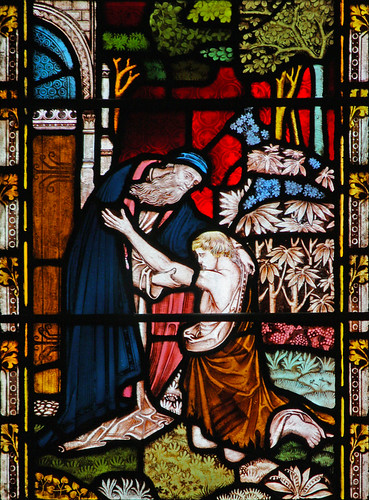
The parables of the "lost sheep" and the "son prodigal "in the Gospel passage for this Sunday are among the most popular parables of the Bible. Through this parable and that of the" lost coin, Jesus reveals in a unique and surprising part of the inner heart of God where love, mercy, compassion and joy for all of us burn more vigorously.

But before stepping on the Gospel, let's look at the first reading, in which we witness the dialogue between God and Moses on Mount Sinai, shortly after the exodus from 'Egypt. God is angry with his people who "pervert" and began to worship a golden calf. He threatens to erase and re-start your plan, completely from scratch, but this time with Moses . Moses tuttavia, apre rapidamente una breccia con Dio e Lo supplica, in nome del popolo d'Israele. Dio ascolta la sua supplica, abbandonando la propria ira e decidendo di non dar seguito alla punizione che aveva minacciato.

In questa lettura si parla del peccato degli Israeliti e delle minacce di Dio di ripudiarli e di punirli. In effetti, anche noi, quando pecchiamo, non meriteremmo altro che la punizione e l'isolamento o, meglio ancora, la nostra punizione è il nostro isolamento da Dio, come la nostra separazione da Dio significa essere separati dalla fonte dell'amore e di tutta la vita. In tutta la Scrittura vediamo questo ciclo ripetersi: Dio stabilisce un legame (l'alleanza) con il Suo popolo, l'uomo rompe quel legame e Dio deve mettere a punto un nuovo piano per ripristinare la comunione. Ma a differenza dei legami umani di amicizia che possono essere guariti dai nostri sforzi, i legami che una volta ci univano con Dio non possono essere curati se non è Dio ad intervenire. Per fare un esempio che mi viene in mente in questo momento: se tu e un tuo amico legate le mani con una corda e poi tagliate la corda, in qualche modo sarà sempre possibile riallacciare la corda. Se, invece, si è sospesi a 3.000 piedi di quota, legati a una corda che pende da una mongolfiera e si decide di tagliare la corda, non c'è speranza: quel legame è spezzato. Quando giriamo le spalle a Dio, abbiamo spezzato il filo della nostra vita, ci tuffiamo sempre più lontano da Dio verso death.

Thus, the parables of the Gospel of today give a striking example of isolation and pain that the man feels when distance or separates from God that we see in the stray sheep that wanders away from his pastor and son leaves his father. But on the other hand, just as Moses threw into the breach, in the first reading, to intercede for the people of Israel and to save him, so Jesus Christ is launched (Wisdom from 18.14 to 15) into the abyss caused by the our sin, to bring us back to God We have here a clash between sin, isolation and death on one side and the dramatic and powerful action of God to bring us home where we belong. In this

way, through the use of the parables of the "lost sheep" of the "lost coin" and "Prodigal Son", Jesus reveals that God is not a severe judge who expects to be able to punish our error, or he simply for dispensing mercy, looking down with haughty eyes and with great reluctance. On the contrary, these parables show us that in the person of Jesus Christ, God has broken into our world to actively seek and that He is pleased when he can lift us from our miseries. God is our Father who wishes to with patience, but at the same time earnestly, we returned home and rushed to hug when we see "the horizon". God is infinitely interested in us! We are your legacy and your baby - and this is something that we should think! In all three parables Jesus speaks of joy and celebration - expressions that faithfully reveal the innermost part of God's heart that longs to be with those he loves.

In conclusion I would say two things. First of all, the parables in the Gospel of today should make us reflect on our concept of God - what is our vision of Him, they have the power to purify the way we see God, ourselves and others as long as there take time to meditate. Secondly, S. Paul (in the second reading) is a shining example of a man who lives on the border between the pains of this life and the joy of heaven. He magnificently embodies the parables of the "lost sheep" and "Prodigal Son". The sorrow for sins committed not cast him into despair, but, indeed, have become the context in which Jesus revealed the depth of His merciful love. S. Paul can then openly admit his sins - no need to pretend that he had never committed, or to attribute responsibility to others, and at the same time, he may rejoice in the mercy of God, the merciful love that has transformed ' St. Paul's entire life and that leads him to exclaim: "to the King eternal, immortal, invisible, the only God, be honor and glory for ever and ever. Amen. " (1 Tm 1,17) Vi auguro una bellissima Domenica!

(Foto "Ritorno del figliol prodigo", per gentile concessione di fr. Lawrence Lew, OP )